
As I sit to write this, I take a moment to arrive.
I feel my feet inside my wool socks; my heels lifted slightly from the floor because the chair legs are longer than my own. I feel the spread of my thighs and backside against the flat surface of the seat panel, and the constriction my waistband causes around my belly. Noticing this, I stand and adjust my trousers. I feel how, resting my forearms on the desks allows me to drop my shoulders, and how years of sitting for yoga or meditation mean my spine has found its natural alignment. I can soften into its natural curves, and breathe into the sideways-ness of my rib cage. I feel the tightness in my upper shoulders and my neck, the stiffening that returns with colder weather. All of this, I can hold in my awareness, while deciding on how to formulate the next line.
What is Embodiment?
Embodiment refers to a number of things, but particularly to a way of being; a way of inhabiting one’s physicality, sensuality, emotions and imagination. Embodiment refers to a state of relaxed but conscious awareness of the body; a genuine perceptual interest in physical sensation, feeling, and the images and stories that arise from the body. It is a way of perceiving one’s lived experience, from the inside out.
Conventional Western approaches view the body as an object, particularly a machine object, made up of distinct parts and systems which either function or don’t. When something goes wrong, we have learnt to outsource expertise to medical professionals and industries which profit from our sickness and separation from our bodies.
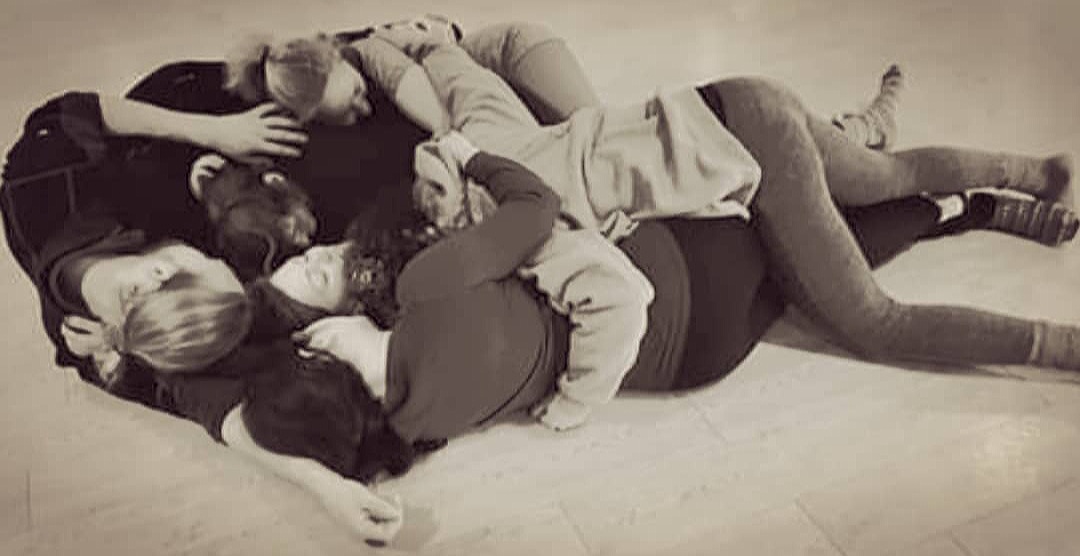
Embodied practices bring us back to a greater sense of wholeness; returning to the body as a source of subjective knowing, learning, adaptation, transformation, healing, and identity. In my own embodiment practices, we invite the body into conversation using movement, touch, improvisation, visualization, imagination, vocalising, and art making. This differs from a traditional ‘talking therapy’ approach, in which the story of our experience is given precedence… Here, we access the silent processes of the body first, those that occur beneath the level of language, and allow what emerges from the unconscious to ‘speak’ creatively. In this way, we learn to describe our experience in a wholly integrated way, rather than relying solely on disembodied narrative.
Embodiment and Mindfulness.
It is a wonderful thing that people are increasingly taking more and regular time to start slowing down and to bring their attention to the present. Practicing presence is a cornerstone of embodiment. Cultivating the ability to bring the attention, again and again, back to the here and now, to this unfolding moment is key. All embodied practices are mindful, there is no mind without the body after-all. However, not all mindfulness practices are embodied. Sitting in mindfulness, observing the thoughts as they arise, noticing the way we speak to ourselves, choosing to pause, reflecting, and then returning to non-judgmental witnessing, we cultivate necessary skills to develop a sense of clarity and freedom, but it is also, possible to forget or ignore the body in that time.
Thought, logic, and judgement are all deeply interconnected with our linguistic brain, we are all of us natural story tellers, and that has its important place… But a good mindfulness teacher, one who knows that all our stories simultaneously grow out from, and take root in the body, will remind us to allow space for the whole experience; we notice a thought or feeling we find compelling, and the concomitant sensations arising in the physical body. We can deepen our mindfulness practice by embodying the postures prompted by our thoughts. This way, we glean greater understanding of the relationship between the body-mind. We can learn to better release stress, tension, shame, frustration, trauma and fear, and find new ways to cultivate compassionate, joyful, responsive, whole-hearted lives.